
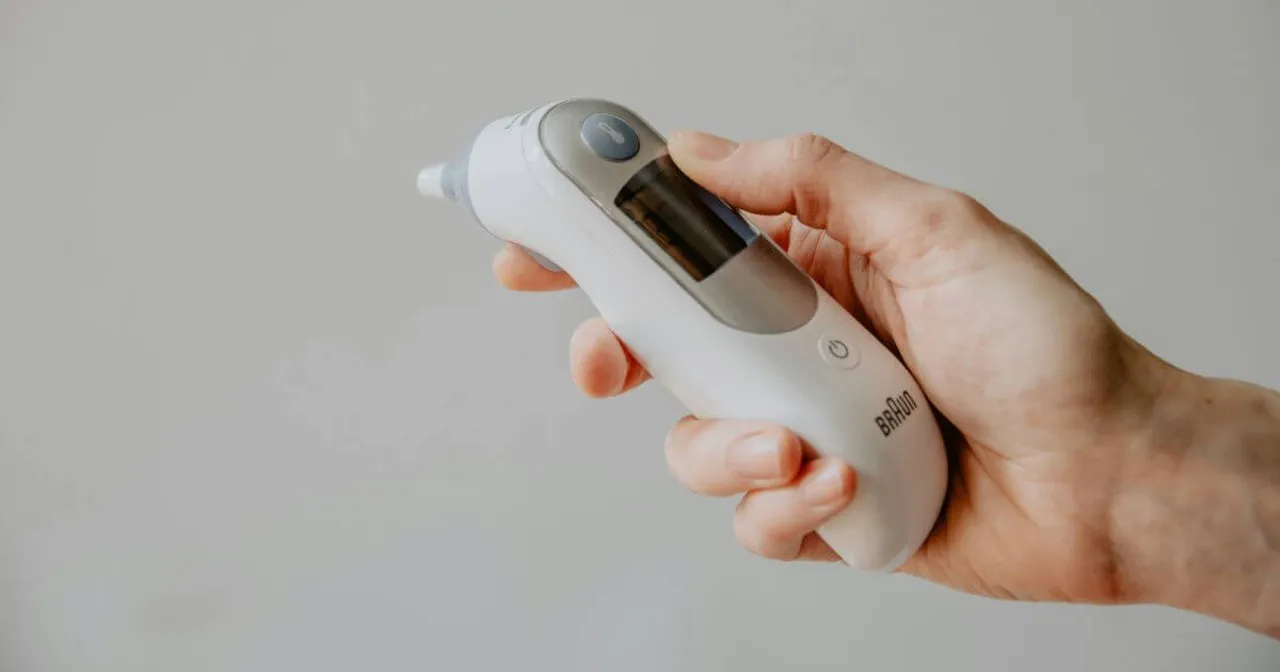
Not all thermometers are created equal- and the "best" one actually changes as your child grows. Here's a breakdown by age so you can take an accurate reading with confidence, whether you're at home or heading out the door to the pediatrician.
Under 3 Months: Rectal Is the Gold Standard
For infants under three months old, a rectal reading is the most accurate method available — and at this age, accuracy really matters. A degree off in either direction could be the difference between simply monitoring at home, calling the pediatrician, or heading to the ER. When it comes to newborns, precision isn't a nice-to-have; it's essential.
3 to 6 Months: Axillary (Armpit) Works Well
Once your baby passes the 3-month mark, an axillary thermometer becomes a solid option. A few tips to get an accurate reading:
- Make sure the entire tip of the thermometer is covered
- Press the arm firmly against the chest
- Ensure there's nothing (like clothing) between the skin and the thermometer
If you ever have doubts about an axillary reading, fall back on a rectal temperature to confirm.
6 Months and Up: Axillary (armpit), Tympanic (ear) or Temporal (forehead) thermometers
At six months, you can introduce tympanic (ear) or temporal (forehead) thermometers into the rotation. Each comes with its own quirks:
- Tympanic (ear) thermometers give a fast reading, but there's a bit of a learning curve. The thermometer has to point directly at the eardrum, and earwax buildup can throw the numbers off.
- Forehead (temporal) thermometers measure core body temperature through the temporal artery. They're convenient, but keep in mind that room temperature and sunlight exposure can skew the reading.
4 Years and Older: Oral Thermometers
By age four, most kids are ready for an oral thermometer, but save this method for children who can reliably keep the tip under their tongue for an accurate reading. Younger kids who fidget or can't follow instructions yet are better served by ear, forehead, or armpit methods.
The bottom line: the "right" thermometer isn't one-size-fits-all and it evolves with your child. When in doubt, especially with infants under three months, rectal remains the most reliable way to know what's really going on.