
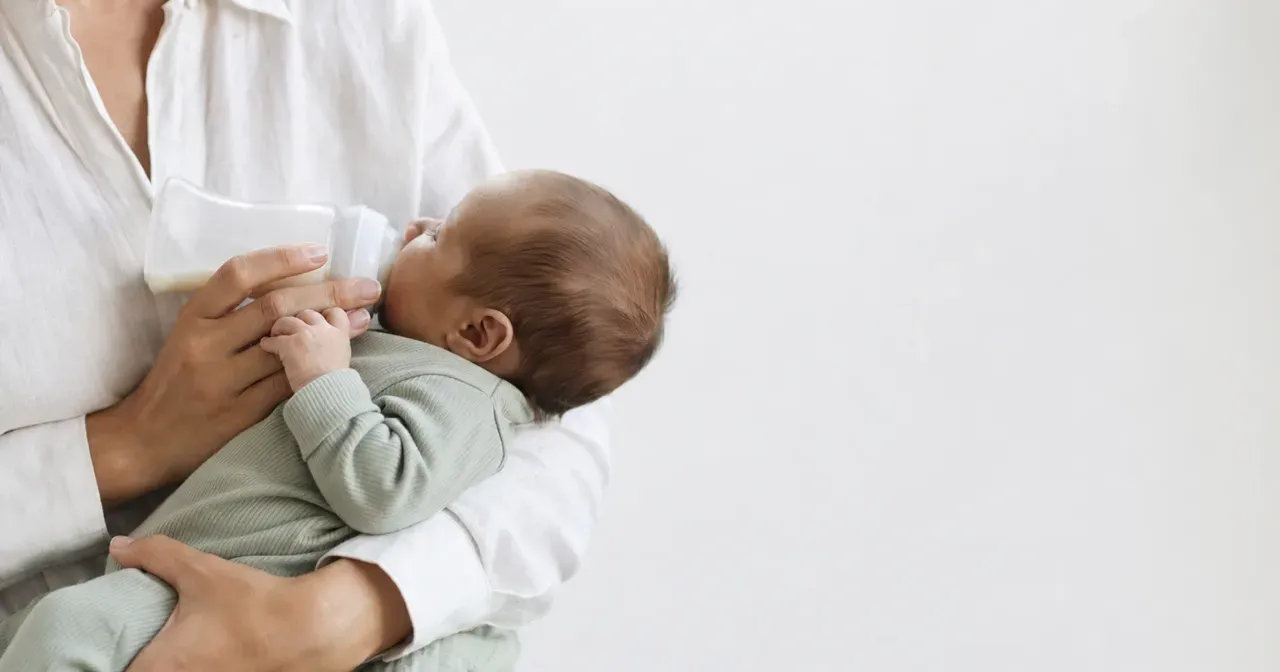
You have pumped, you have bought the bottle everyone recommended, and your baby turns their head away or cries. If you are heading back to work, that is stressful.
The CDC notes that it takes some time for a baby to learn how to drink from a bottle, so a first refusal does not mean something is wrong.
The short answer: the AAP suggests having someone other than the breastfeeding parent offer the bottle, somewhere other than where you usually feed, when your baby is alert but not so hungry they are upset. Go slowly, and try again another day if it is not going well.
What the AAP and CDC suggest
Who offers it. The AAP says many mothers find it works better if someone else offers the bottle at first, such as a partner, a loved one or a future caregiver. The CDC agrees that a breastfed baby may be more willing to take a bottle from someone other than you.
Where. Somewhere other than where the baby usually breastfeeds, so there are none of the usual cues to start looking for the breast (AAP).
When, and how much. For the first few attempts, the AAP suggests offering about half an ounce of breast milk an hour or two after a regular feed, when your baby is alert and willing to try something new but not so hungry that they are upset. The CDC also advises picking a time when your baby is calm and not too hungry or full.
How. The AAP suggests keeping a calm, reassuring manner, dripping a little familiar-tasting breast milk on the baby's lips or tongue, then slowly and gently introducing the nipple and letting the baby explore it, without forcing it past the gums.
Pace it. The CDC recommends holding the bottle at an angle rather than straight up and down, so milk only comes out when your baby sucks, and letting your baby take breaks. Watch for signs that they are full and stop, even if the bottle is not empty.
When it is not going well
The AAP says to stop the attempt if your baby becomes frustrated, or if more than ten minutes pass and they have not fed. It is better to end on a positive note and try again the next day than to create an association between the bottle and frustration.
If after a few daily attempts your baby still refuses, the AAP suggests trying a different kind of nipple, or a cup instead of a bottle. If your baby uses a pacifier, they may prefer a similar nipple.
Tips from Marie
- Let your baby get comfortable with just the nipple first.
- Dip the nipple in warmed breast milk so they can smell and taste it.
- Try moving: walking and small bounces while feeding can take the focus off the bottle.
- It is not one size fits all; a different bottle system may help.
When to ask for help
Ask your baby's provider or a feeding professional for help if:
- Your baby is not taking enough, or you see signs they may not be getting enough. The CDC says to speak to your baby's health care provider right away if you are worried that they are not getting enough to eat, and the diaper chart shows what to look for.
- You are returning to work on a fixed date and have run out of ideas
- You are not sure whether the problem is the bottle or the latch
A nurse practitioner and certified breastfeeding specialist like Marie Udell can watch an actual feed. She is not an IBCLC, and if your situation calls for one she will tell you. Support is included in the Newborn Support Package for South Jersey families, and by text anywhere in New Jersey through membership. More on how she helps is on the breastfeeding support page.
Sources
- AAP HealthyChildren.org, Introducing the Bottle
- CDC, About Feeding From a Bottle
This is general information and not a substitute for advice about your own baby.